Naqvix logo
Book a Call

AUTOMATION & RPA SERVICES

Automate the Work That Slows Your Business Down

At Naqvix, we build intelligent automation systems that eliminate repetitive manual work, reduce human error and free your team to focus on what actually grows your business. From simple workflow automations to complex multi-system RPA processes — we identify, design and deploy automation that delivers measurable ROI.

What We Automate

End-to-end automation services, from data entry bots to complex multi-system integrations.

RPA Bots for Data Entry

Automated bots that extract data from documents, emails and web sources and enter it directly into your systems — eliminating manual data entry completely.

Document Processing AI

Intelligent document extraction that reads invoices, contracts, forms and records — classifying, extracting and routing structured data automatically at scale.

Workflow Automation

Multi-step automated workflows connecting your CRM, email, project management, accounting and other tools — triggering actions automatically based on events.

System Integration

Connect systems that do not talk to each other. Bidirectional data sync between your CRM, ERP, marketing tools, databases and custom platforms via API integration.

Email & Communication Automation

Automated email sequences, internal notifications, Slack alerts and communication workflows triggered by business events and system conditions.

Reporting Automation

Automated report generation pulling from multiple sources, applying business logic and delivering formatted reports to the right people on a defined schedule.

How We Automate Your Business

A proven five-step process from process audit to deployment and training.

01

Process Audit

We map your highest-volume manual processes, measure time spent and calculate the cost. We identify your top automation opportunities ranked by ROI.

02

Automation Design

We design the automation architecture — which tools to use, how systems connect, what triggers what, and how errors are handled when things do not go as expected.

03

Build & Test

We build the automation incrementally with thorough testing at every step. New automations run in parallel with existing processes before full handover.

04

Deploy & Monitor

Automation goes live with monitoring in place. Error notifications alert your team if anything requires attention. Full documentation provided.

05

Training & Support

We train your team to understand, monitor and request changes to automations. Ongoing support retainers available as your operations evolve.

Why Businesses Trust Naqvix for Automation

ROI-first approach, reliability built in and full documentation on every automation we deliver.

ROI-First Approach

We calculate expected ROI before we start. Time saved, error rate reduction, cost eliminated — all quantified upfront so you know what you are investing in.

Reliability Built In

Every automation includes proper error handling, monitoring and fallback procedures. When something unexpected happens, you know about it immediately and it is handled gracefully.

Full Documentation

Every automation is fully documented — what it does, how it works, what to do if it breaks. Your team understands and owns what we build.

No Vendor Lock-In

We build on tools you can maintain. No proprietary platforms, no black boxes, no dependency on us to keep your automations running.

Our Automation Technology Stack

RPA
UUiPath
AAutomation Anywhere
PPower Automate
ZZapier
AI/ML
PythonPPython
TensorFlowTTensorFlow
OOpenAI
LLangChain
Integration
MMake
nn8n
WWebhooks
RREST APIs
Cloud
AAWS Lambda
GGoogle Cloud Functions
AAzure
DockerDDocker

Frequently Asked Questions

Common questions about our automation and RPA services.

Every Hour on Manual Work Is an Hour Not Spent on Growth

Book a free process audit. We will identify your highest-cost manual workflows and show you exactly what is automatable — with no commitment required.

Get a Free Process Audit
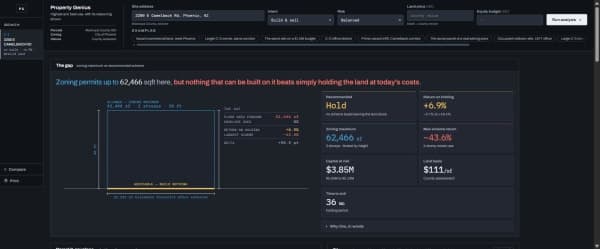
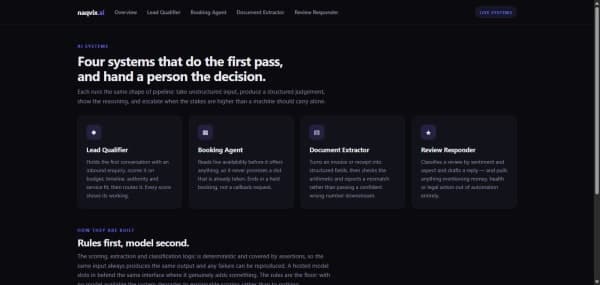
How a process gets automated safely

Automation multiplies whatever process it is applied to. Applied to a good process it compounds savings; applied to a broken one it produces errors faster than people can catch them.

  1. Mapping the process as it really runs

    The actual steps, systems, handoffs, volumes and exception rates are documented — including the undocumented workarounds people rely on. The real process is almost never the one written in the procedure document.

  2. Qualifying the return before building

    Volume multiplied by handling time multiplied by loaded cost gives the annual value at stake, weighed against build and maintenance effort. High-volume, rule-based, low-exception processes are automated first; judgement-heavy ones usually should not be.

  3. Fixing the process, then automating it

    Redundant approvals and duplicate data entry are removed before any automation is written. Automating waste locks it in and makes it considerably harder to remove later.

  4. Designing the exception path first

    What happens when a record is malformed, a system is down or a value is unexpected is designed alongside the happy path. Unhandled exceptions are how automation fails silently and expensively.

  5. Building with idempotency and an audit trail

    Every step is safe to retry and every action is logged with inputs, outputs, timestamp and outcome. Without that, a partial failure cannot be resumed, diagnosed or proven to an auditor.

  6. Piloting in parallel, then monitoring

    The automation runs alongside the manual process until outputs match, then takes over with alerting and a named owner. Automation without an owner degrades quietly as the systems around it change.

What usually goes wrong

The recurring reasons automation projects disappoint or quietly stop working.

Automation terms, in plain English

The vocabulary of process automation, defined without vendor spin.

RPA vs API integration
Robotic process automation drives software the way a person would, through its interface. API integration connects systems directly. RPA works where no API exists; direct integration is far more reliable wherever it is possible.
Idempotency
The property that running a step twice produces the same result as running it once, which is what makes retries after a failure safe.
Webhook
A message one system sends another the moment an event occurs, replacing repeated polling. Webhooks can arrive twice or out of order, so handlers must be idempotent.
Exception queue
The holding area for records the automation could not process, surfaced for human resolution instead of being dropped.
Straight-through processing
The share of items completing end to end with no human touch. It is the honest headline measure of an automation’s value.
Orchestration
Coordinating multiple steps and systems into one reliable sequence, with defined retries, ordering and failure handling.
Audit trail
The durable record of what ran, when, on which input, and what resulted — required for debugging, for compliance, and for trusting the system at all.

Related work

Projects we've delivered in this space.

View all work
Foodie: A TikTok-Style Food Discovery App With Its Own In-App Video Editor — Naqvix case study
BuildFood & Drink / Social

Foodie: A TikTok-Style Food Discovery App With Its Own In-App Video Editor

Foodie

Building Roadsider's Sales Engine: Custom CRM, AI Outreach, and Growth Operations — Naqvix case study
BuildAutomotive B2B / Roadside Assistance Technology

Building Roadsider's Sales Engine: Custom CRM, AI Outreach, and Growth Operations

Roadsider

From Ad Click to CRM Lead: Full-Funnel Growth for Ruby Event Center — Naqvix case study
GrowEvents & Venue Management

From Ad Click to CRM Lead: Full-Funnel Growth for Ruby Event Center

Ruby Event Center

Related services

Teams often pair this with these services.