
On-Demand & Towing App Development
Software for the Moment Someone Is Stuck on the Roadside
A stranded driver doesn’t browse — they tap, or they call. We build two-sided on-demand apps that match customers with operators, call-first lead websites that cover every city you serve, and the sales systems roadside businesses use to grow.
What we build for towing and on-demand businesses
Pick the pieces your model needs — they are designed to work together.
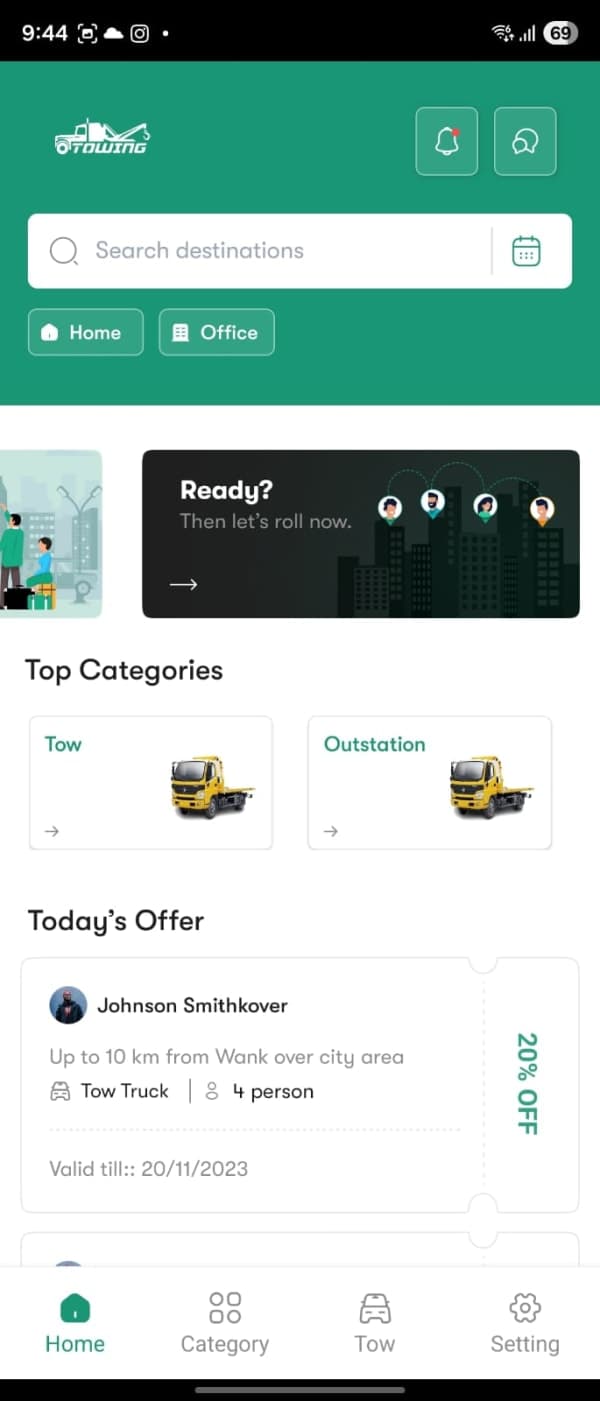
Customer app
Destination search, saved places and scheduled bookings, with separate flows for different job types — local tow, city-to-city transport, truck rental.
Driver / operator app
An availability toggle so operators control when they get work, a job-management view for assigned jobs, and clear earnings visibility.
Live job screen
Once a job is assigned, the customer sees the driver’s profile, rating and fare, with one-tap in-app chat and calling — no waiting blind.
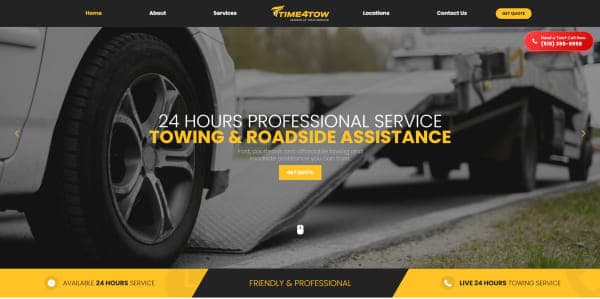
Multi-city lead websites
A dedicated page per city with its own branch phone line, an interactive coverage map, and 24/7 call-first CTAs on every page.
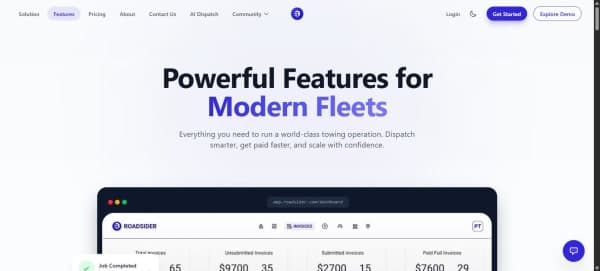
Sales CRM for roadside SaaS
A lead pipeline with motor-club and channel attribution and role-based access, for companies selling software or services to towing operators.
Wallets, offers and history
In-app wallet, promotional offers on the home screen, and tabbed history of current and past jobs.
Towing and roadside projects we have built
Each of these is written up in full as a case study.
How an on-demand app gets built properly
Two-sided products fail when one side is an afterthought. We design both sides of the marketplace together.
Define the job types first
A local hook-up, a city-to-city move and a rental are different jobs with different pricing and questions. The booking flow branches on the first screen, so each job asks only what it needs.
Design for the stressed user
The customer may be on a road shoulder at night. Large targets, minimal typing, saved places and a visible way to call a human are requirements, not polish.
Give the operator control
Operators need to switch availability on and off, see job details clearly before accepting, and trust the earnings figures — or they stop using the app.
Matching and job states
Each job moves through explicit states — requested, assigned, en route, completed, cancelled — so both apps and the admin always agree on what is happening.
Communication without phone-number exposure
In-app chat and calling keep the customer and driver connected during the job while giving the business a record of the interaction.
Launch city by city
Coverage, pricing and supply are validated one market at a time, and the web presence gets a page and phone line per city so local search works from day one.
What usually goes wrong with on-demand apps
These are the failure modes that sink most “Uber for X” projects.
Building only the customer side
Without a usable operator app there is no supply, and without supply the customer app is an empty shell. Both sides are scoped and tested together.
One flow for every job type
Forcing a rental and an emergency tow through the same form confuses both. Job type is chosen first and each type gets its own path.
Silent waiting after booking
A customer who can’t see who is coming or reach them will call a competitor. The assigned-job screen shows the driver and keeps chat and call one tap away.
One homepage for every city
A single page can’t rank for “towing near me” in six markets. Each city gets its own page, phone line and service area.
No way to see where business comes from
Jobs from motor clubs, partners and the web look identical in a spreadsheet. Source is tracked on every lead and job from launch.
Towing and on-demand terms, in plain English
- Two-sided marketplace
- A platform serving two distinct user groups — here, customers who need a tow and operators who provide one — each with their own app.
- Motor club
- A roadside-assistance membership provider that dispatches jobs to independent towing companies. A major lead source for towing operators.
- Outstation tow
- A long-distance, city-to-city vehicle transport, priced and scheduled differently from a local tow.
- Dispatch
- Assigning an incoming job to an available operator, manually by a dispatcher or automatically by the platform.
- Availability toggle
- The operator’s on/off switch for receiving new jobs — the simplest control that keeps drivers in charge of their time.
- Call-first design
- A layout where the phone number and call button are the primary action on every page, because urgent customers call rather than fill forms.
Frequently Asked Questions
Related services
The service teams behind this kind of project.
App Development
Native iOS and Android plus cross-platform Flutter and React Native mobile apps.
Explore serviceAI Bots
Production-ready bots for customer support, dispatch, booking and lead qualification.
Explore serviceBPO / KPO Services
Dispatch operations, customer support, back-office and virtual assistance teams on SLA.
Explore serviceBuilding an on-demand or towing platform?
Tell us which side of the job you need to solve first — customers, operators, dispatch or sales — and we’ll scope it from there.
Book a Call