
Event Venue Booking & Ticketing Software
One System for Enquiries, Date Holds and Ticket Sales
A venue sells dates, not capacity. Every enquiry is the same question — is that evening free, and will you hold it? We build the venue website, the booking CRM behind it and first-party ticketing as one platform, so what the public books is exactly what your staff see.
What we build for venues and event businesses
Built as one connected platform, so there is no sync problem between the website and the back office.
A venue website that converts
Gallery, services and testimonials that funnel into a booking enquiry capturing event type, preferred date, time slot and guest count.
Leads-to-bookings CRM
Every enquiry — web, chatbot, phone, walk-in or referral — becomes a lead with a status and activity history, and a won lead becomes a booking.
A shared calendar
Pending holds, confirmed events and site tours on one colour-coded calendar, so “is that Saturday free?” has a single answer.
First-party ticketing
Ticketed events with price, capacity and a real-time remaining-ticket count, sold on your own site through Stripe — no ticketing middleman taking a fee per ticket.
Door check-in and counter sales
Check guests in by receipt code or QR scan, and record walk-up sales reconciled against takings.
Owner-editable content
Headline numbers, menus, galleries and site images editable from the admin, so updating the website never needs a developer.
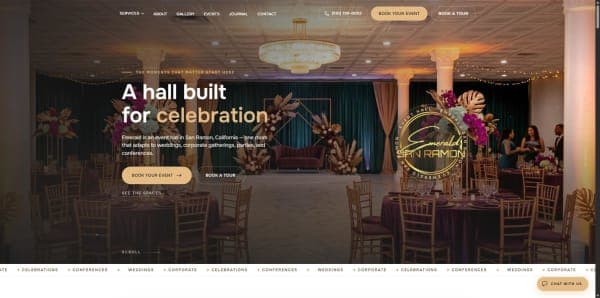
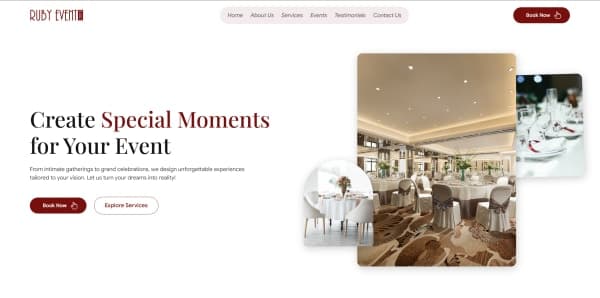
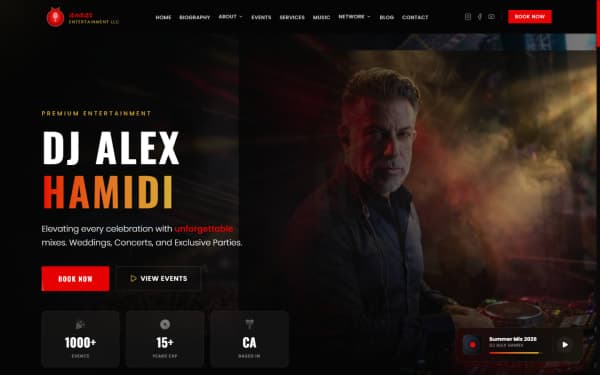
Venue and events platforms we have built
Each of these is written up in full as a case study.
How venue software gets built properly
The hard parts of venue software are availability and money. The sequence below deals with both first.
Model what you actually sell
A single-room venue sells dates; a multi-room venue sells room-slots; a ticketed event sells seats. The booking model is decided first because everything else depends on it.
Design the enquiry funnel
The public enquiry asks only what staff need to answer — event type, date, slot, guest count — and lands straight in the pipeline with its source recorded.
Holds, deposits and the calendar
Pending holds, confirmed bookings and tours are distinct states on one calendar, with rules for when a hold expires and a date becomes free again.
Ticketing built against payment failure modes
Payment webhooks are signature-verified, fulfilment is idempotent so provider retries cannot mint duplicate tickets, and the final seat is protected against two buyers checking out at once.
Door operations
Check-in has to answer “has this person paid?” in seconds with a queue forming — so it works from a receipt code or QR scan on a phone.
Hand the content to the owner
Anything that changes seasonally — menus, numbers, galleries, events — is editable in the admin before handover.
What usually goes wrong with venue systems
These are the failure modes we design against from the first sprint.
Double-booked dates
Enquiries tracked in inboxes and a separate calendar drift apart. A booking and its date live in one record, and holds block the calendar the moment they’re placed.
Fake or duplicate tickets
An unverified payment webhook lets anyone post a fake “paid” event. Only signature-verified webhooks mint tickets, and the database rejects duplicates outright.
Overselling the last seat
Two buyers can both reach checkout for the final ticket. Fulfilment re-checks inventory under a lock and refunds the loser rather than overselling.
Losing the customer to a ticketing platform
Third-party ticketing takes a fee per ticket and owns the buyer’s details. Selling on your own site keeps both the margin and the relationship.
A website only a developer can change
Numbers and menus hardcoded into the site never get updated. Content that changes is moved into the admin.
Venue and ticketing terms, in plain English
- Date hold
- A provisional reservation that blocks a date for a prospective client for a set period, usually until a deposit is paid.
- Payment webhook
- A message the payment provider sends your server when a payment succeeds. It must be signature-verified, or it can be forged.
- Idempotent fulfilment
- Processing the same payment event twice produces one ticket, not two — essential because payment providers retry deliveries.
- Inventory lock
- Briefly reserving the remaining stock while an order is finalised, so two buyers cannot both be sold the last seat.
- First-party ticketing
- Selling tickets on your own website and payment account instead of through a ticketing marketplace.
- Check-in scan
- Validating a ticket at the door from a QR code or receipt code against the live order record.
Frequently Asked Questions
Related services
The service teams behind this kind of project.
Web Development
Full-stack web applications with React, Next.js and Node.js, built for performance and scale.
Explore serviceFull-Stack Development
End-to-end product builds — web, mobile, CRM and enterprise systems delivered by one team.
Explore serviceDigital Marketing
SEO, paid ads, social media and content marketing — data-driven and transparently reported.
Explore serviceRun your venue from one system
Tell us how enquiries, bookings and ticket sales work at your venue today, and we’ll map what one connected platform would replace.
Book a Call